
It's time to turn insights into personas!
Tasked to spearhead the initiative, I transformed data into personas that captured not just numbers, but motivations and pain points. They are set to become a compass for product design decisions.
Problem:
How might we make the users list their property exclusively with Ohmyhome?
Solution:
We redesigned the DLP to cut down on time and confusion, creating a simpler flow that lets users list properties quickly with a clear agent support option when needed.
This initiative started with a simple question from our team lead: "how do we keep our product designs aligned?" When we reviewed what we had, the gap was clear. We only had a flow chart of user segments, but nothing that truly described who our users were. Without personas, our design decisions lacked consistency and depth.
I was assigned to lead the project, so I began by researching how larger organizations create personas to make sure our process stayed structured and organized. With an outline ready, I ran a persona workshop with the design team and our product manager. I set up a Figma Jam board with references, opened with a quick MBTI icebreaker, and got everyone comfortable before diving in.
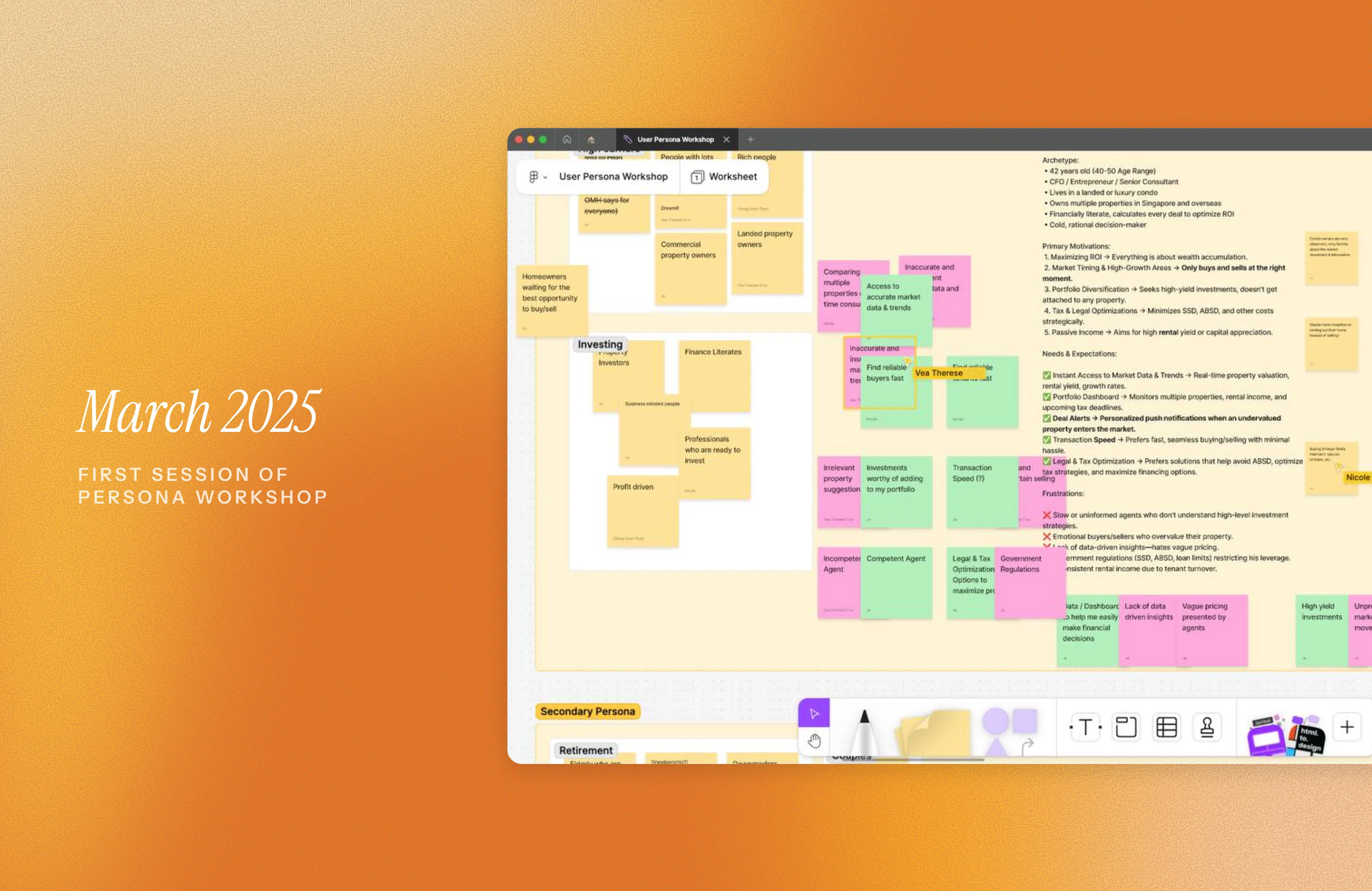
For the first activity, I asked the team to list what they believed our user segmentations were based on their observations and the data we had. Since most of our revenue comes from sellers, we decided to focus there first. Every idea went up on the board, even duplicates, before we filtered and grouped them into themes.
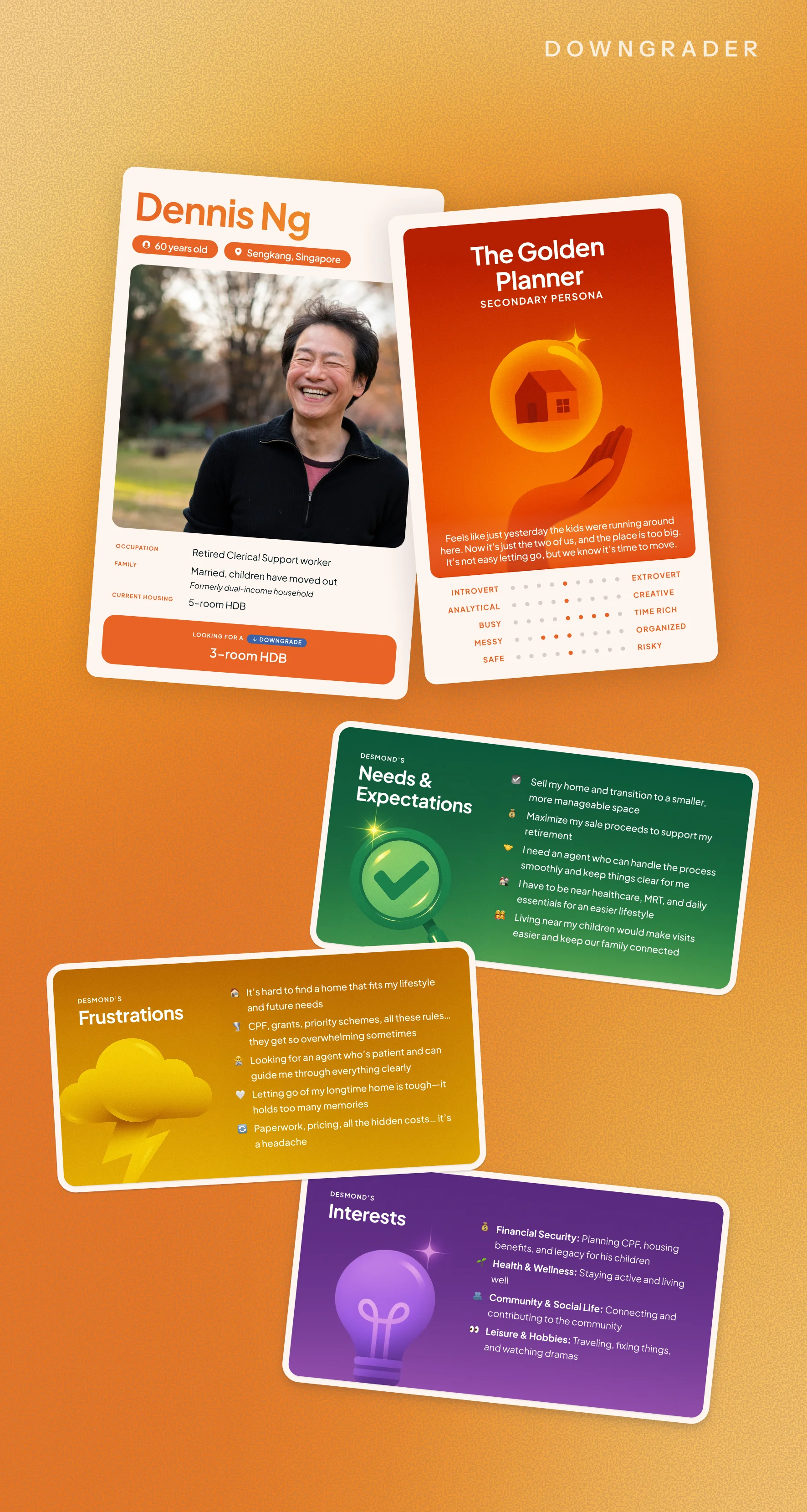
Ohmyhome already had three established seller categories: Upgraders (moving to a better home), Downgraders (scaling down), and Investors (buying for returns, not living). To stay aligned with how the company views its users, we connected the themes from our brainstorming to these existing categories. This helped us build out a user story for each one, making sure their unique needs and frustrations were well captured.
After our first workshop, I refined the draft by validating the user stories against the data we had. This step ensured they reflected real behaviors rather than assumptions and that the details stayed practical, not fictional. Once refined, I shared the updated version with our PM for validation.
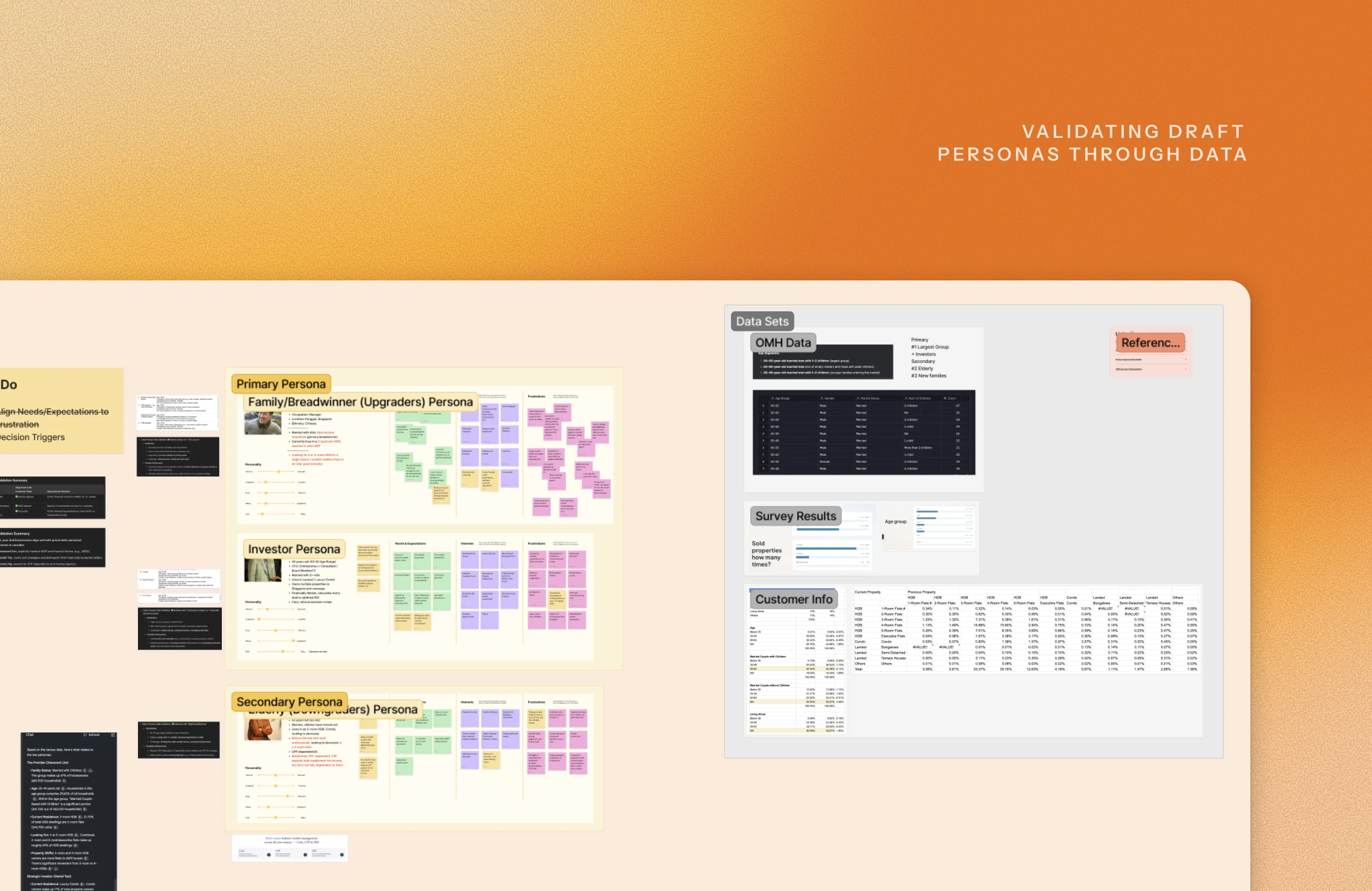
After plenty of discussions and back-and-forth, we brought those stories to life as three user personas. Let me introduce them to you!
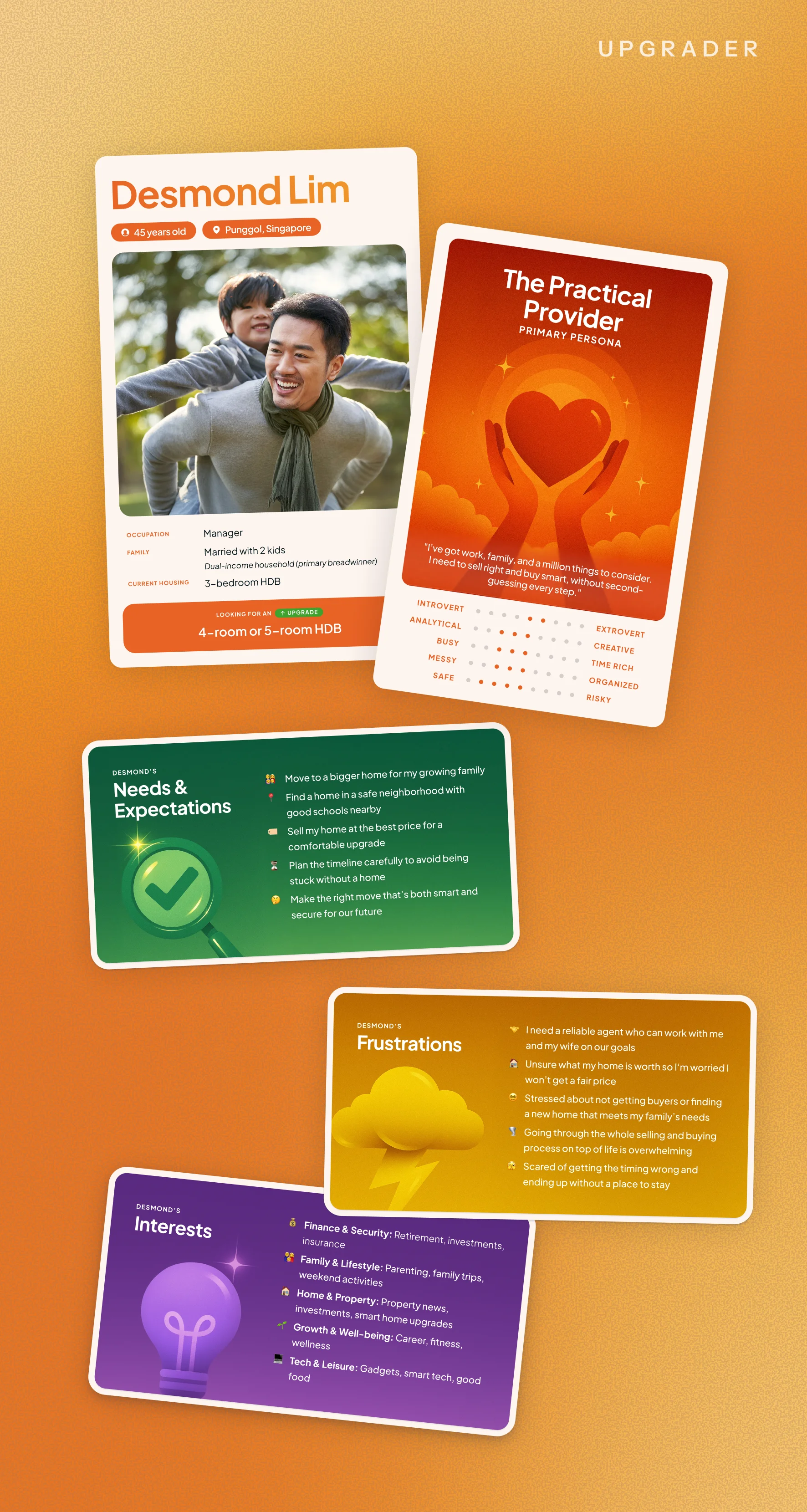
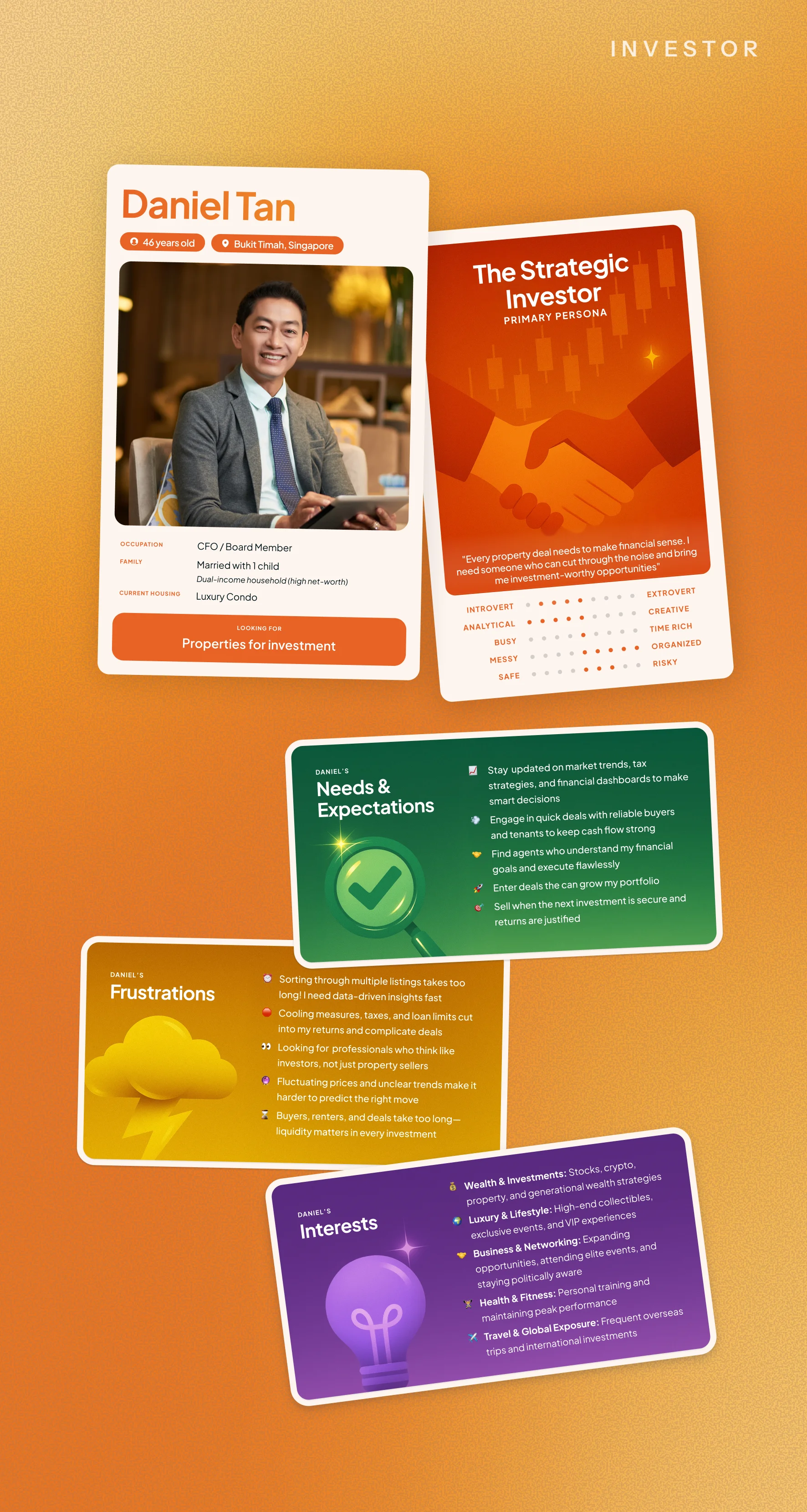
Before this initiative was put on hold, one of our project managers endorsed another dataset that could help us widen our market representation. I’d like to dive deeper into this to see if adding more user personas would truly make a difference. On top of that, running user interviews could help refine the personas we already have and make them feel even more grounded and realistic.

